


Uber Clone App Guide for Startups Building a Scalable On Demand Transportation Business
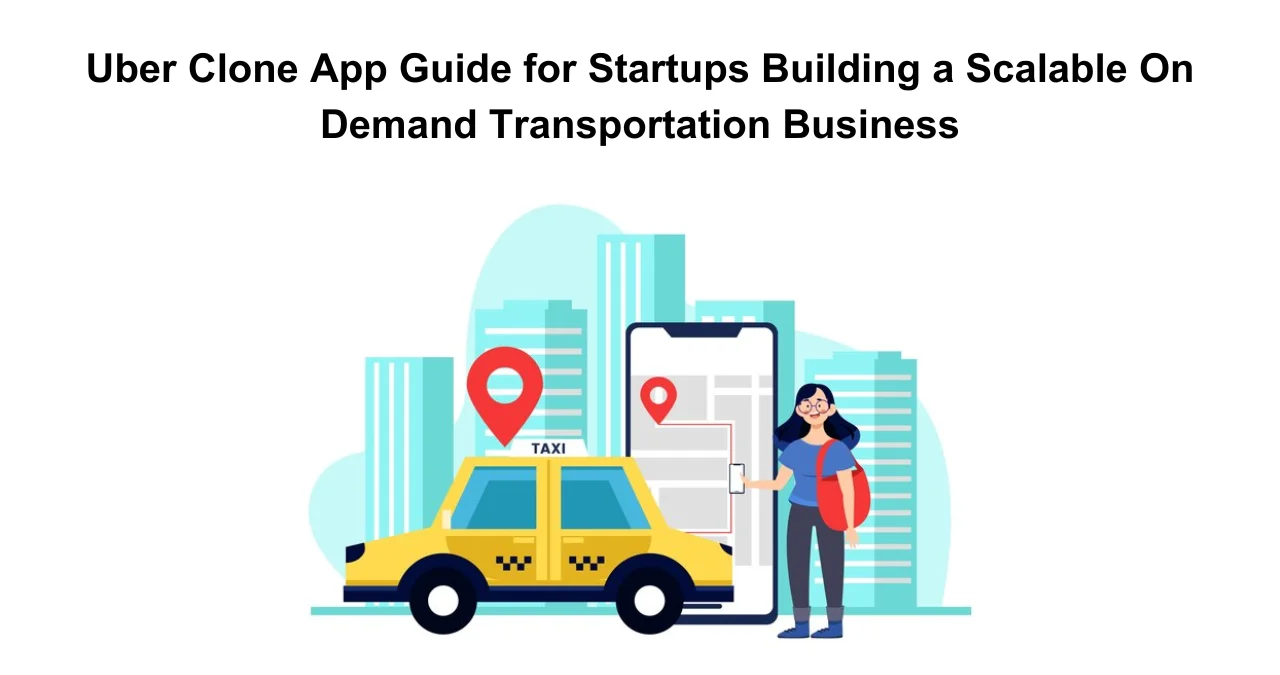
The on-demand transportation industry has changed how people move around cities. Customers now expect fast booking, transparent trip information, convenient payments, and reliable transportation from a single mobile platform. For entrepreneurs and startups, this shift has created an opportunity to build transportation businesses that can serve specific markets, customer groups, and service categories.
However, launching a taxi booking platform from the ground up can require extensive planning, product development, testing, market research, and continuous improvement. This is where an Uber Clone can provide a practical starting point for businesses that want to enter the ride-hailing market with an established business model and the flexibility to create their own brand.
An Uber Clone is not simply a copy of another company's application. A well-planned solution should provide the core functionality needed to operate an on-demand transportation business while allowing entrepreneurs to build a differentiated service around their target market.
For startups, the objective should not be to replicate another brand feature by feature. The objective should be to understand the proven ride-booking model, adapt it to local demand, and create a transportation service with a clear competitive advantage.
What Is an Uber Clone App?
An Uber Clone App is a ready-made ride-hailing application solution inspired by the operational model of leading transportation platforms. It allows entrepreneurs to launch their own branded taxi or ride-booking service without having to define every part of the product from the beginning.
The concept typically connects passengers with drivers through a digital platform. Customers can request rides, select available transportation options, receive trip information, communicate with drivers, make payments, and provide feedback.
For business owners, the platform provides tools to manage transportation operations, drivers, customers, service areas, bookings, and business policies.
The major advantage is the ability to start with a proven business concept while still adapting the platform to a specific market.
A startup targeting airport transportation, corporate mobility, premium rides, local taxis, electric vehicles, intercity transportation, or underserved regions can use the basic ride-hailing model as a foundation and develop its own market positioning.
Why Startups Are Considering the Uber Clone Business Model
Starting a transportation technology business requires more than creating an application. Entrepreneurs need to understand how customers book rides, how drivers accept requests, how trips are managed, and how the business maintains service quality.
A clone-based approach can reduce the amount of initial product discovery required because the core ride-booking concept is already familiar to consumers.
Faster Entry Into the Transportation Market
Speed can be important for startups operating in competitive markets. A ready-made transportation solution gives entrepreneurs a structured starting point rather than requiring them to develop every basic concept from zero.
This allows business owners to focus more attention on market research, driver acquisition, partnerships, customer acquisition, and service differentiation.
Familiar User Experience
Customers are already familiar with ride-hailing applications. They understand basic concepts such as entering a pickup location, selecting a destination, requesting a ride, tracking a trip, and rating a driver.
A familiar experience can reduce the learning curve when a new transportation platform enters a market.
Opportunity for Market-Specific Customization
A successful taxi business does not necessarily need to serve everyone.
A startup could focus on:
- Airport transfers
- Corporate transportation
- Women-focused transportation services
- Luxury rides
- Electric vehicle transportation
- Intercity taxi services
- Local taxi operators
- Student transportation
- Medical transportation
- Tourism transportation
- Fleet management services
This makes customization an important part of an Uber app clone strategy.
How an Uber Clone App Works
The operating model is straightforward from the customer's perspective, but several coordinated processes are involved.
A customer opens the taxi booking app, enters the pickup and destination locations, reviews the available ride options, and requests a trip.
The platform identifies suitable drivers based on factors such as availability and location. A driver receives the request and can accept the trip.
Once accepted, the customer receives relevant driver and trip information. The driver reaches the pickup location and starts the journey.
During the trip, the customer can follow the journey and access important ride information. After reaching the destination, the trip is completed and the applicable payment process takes place.
Customers and drivers can then provide ratings or feedback.
This simple booking cycle creates the foundation of the ride-hailing business model.
For entrepreneurs, the important consideration is how this workflow can be adapted to their target market.
Essential Features to Consider in an Uber App Clone
The features of a transportation platform should support the complete journey of both customers and drivers. Instead of adding features simply because competitors have them, startups should prioritize functionality that supports their business objectives.
Customer Registration and Profile
Customers should be able to create and manage their accounts easily. A profile can contain basic information needed for booking and communication.
Simple onboarding is important because unnecessary registration steps can create friction before the customer completes their first booking.
Location and Destination Selection
Location functionality is central to any taxi booking platform. Customers should be able to specify pickup and destination locations conveniently.
Accurate location information helps improve the overall booking experience and reduces confusion between drivers and passengers.
Ride Selection
A business can offer different transportation categories based on its target market.
For example, a platform may offer standard rides, premium vehicles, larger vehicles, or specialized transportation services.
This gives entrepreneurs the flexibility to build different service tiers.
Driver Discovery and Ride Requests
Once a customer requests a ride, the platform should facilitate the process of identifying an appropriate driver.
The objective is to reduce waiting time while helping drivers receive relevant ride opportunities.
Real-Time Trip Information
Customers want visibility into their transportation journey. Trip status, driver information, pickup details, and journey progress can contribute to a more reliable customer experience.
Driver Profiles
Driver information helps customers understand who will be providing the service.
Profiles can include relevant identification, vehicle information, ratings, and other information determined by the business.
Ratings and Reviews
Ratings allow customers to provide feedback about their experience.
They can also help businesses identify service-quality issues and recognize consistently high-performing drivers.
Notifications
Notifications can keep customers and drivers informed about booking confirmations, ride status, driver arrival, trip completion, and other important events.
Effective communication is especially important when a transportation service operates at scale.
Digital Payments
Modern transportation businesses commonly provide convenient digital payment options. Depending on the target market, a business may support different payment methods suitable for its customers.
The payment experience should be straightforward and transparent.
Booking History
Customers benefit from being able to review previous rides. Booking history can help users track their transportation activity and access relevant trip information when required.
Building a Business Model Around On-Demand Taxi Services
Technology is only one component of a transportation business. Startups also need a clear business model.
An on-demand taxi business can generate revenue through several approaches depending on its market and operating structure.
One common approach is to earn a commission or service fee from completed trips.
Another model can involve business accounts where companies use the platform to arrange transportation for employees, clients, or customers.
Premium transportation services can also create opportunities through higher-value ride categories.
Entrepreneurs should select a model based on market demand rather than simply copying the monetization strategy of an established competitor.
Choosing the Right Market for Your Taxi Booking App
Market selection can have a significant impact on the success of an on-demand transportation business.
Launching in a market simply because ride-hailing is popular is not enough. Entrepreneurs should evaluate transportation gaps, customer behavior, driver availability, regulations, competition, and local preferences.
Study Local Transportation Problems
Start by identifying the problem you want to solve.
For example, customers may experience limited transportation options in specific locations, unreliable airport transfers, poor availability during certain hours, or a lack of premium transportation services.
A strong business addresses a real transportation problem.
Analyze Existing Competitors
Competitor research should focus on more than application features.
Analyze:
- Target customers
- Service areas
- Transportation categories
- Driver acquisition methods
- Customer complaints
- Service quality
- Brand positioning
- Market gaps
This information can help identify opportunities for differentiation.
Understand Driver Requirements
Drivers are a critical part of a ride-hailing marketplace.
A platform cannot provide reliable transportation without sufficient driver participation. Entrepreneurs should therefore consider driver onboarding, documentation, service expectations, incentives, communication, and retention strategies.
Uber Clone Script vs. Building Completely From Scratch
Entrepreneurs often need to decide whether to create a transportation platform from scratch or use a ready-made solution.
Developing everything from the beginning provides maximum control over product decisions, but it can also require extensive planning and development effort.
An Uber Clone script provides a predefined foundation for common ride-booking operations. Businesses can then focus on customization and market requirements.
The right decision depends on the startup's objectives, technical requirements, timeline, target market, and long-term product strategy.
A clone solution should therefore be evaluated as a business accelerator rather than simply as a shortcut.
Read More: How Does Uber Work? Taxi Booking App Model Explained
Customization Is Critical for Long-Term Differentiation
One of the biggest mistakes startups can make is launching a platform that looks and operates exactly like every other ride-hailing service.
The core model may be familiar, but the business needs its own identity.
Customization can involve service categories, booking rules, geographic coverage, customer segments, driver policies, communication methods, loyalty programs, and operational workflows.
For example, an entrepreneur targeting corporate mobility could design the service around business accounts and employee transportation.
A startup focused on airport transfers could prioritize scheduled rides and airport-specific workflows.
A regional taxi business could use the platform to modernize an existing transportation network.
The technology should support the business strategy rather than define it.
Key Benefits of Uber Clone App Development for Entrepreneurs
Reduced Product Development Complexity
Starting with an established ride-booking model can reduce the amount of initial product planning required.
Entrepreneurs can begin with commonly expected transportation functionality and then prioritize improvements based on real customer feedback.
Faster Market Validation
Startups need to validate assumptions quickly.
A transportation platform can help businesses test questions such as:
- Will customers book rides digitally?
- Which service category receives the most demand?
- Which locations generate the highest booking volume?
- Which customer segment is most valuable?
- What causes customers to abandon bookings?
Real market data can guide future decisions.
Scalable Business Expansion
A transportation business may begin in one city or region and expand gradually.
Once the operating model has been validated, the business can explore additional service areas, vehicle categories, customer segments, or transportation services.
Scalability should be considered from the beginning so that growth does not require rebuilding the entire business model.
Stronger Brand Ownership
A branded clone solution allows entrepreneurs to build their own transportation company rather than directing customers toward an existing marketplace.
The long-term goal should be to create brand recognition, customer loyalty, and a differentiated value proposition.
How to Select an On Demand Taxi App Development Company
Selecting the right technology partner is one of the most important decisions for a startup investing in on demand taxi app development.
Businesses should evaluate potential development partners based on their industry experience, customization capabilities, technology expertise, support processes, and understanding of marketplace and on-demand applications.
Evaluate Industry Experience
A company that has worked with transportation or marketplace applications may understand common operational challenges better than a provider with only general mobile development experience.
Ask about previous ride-hailing, taxi, delivery, or service marketplace projects.
Review Customization Capabilities
Avoid providers that only offer an unchangeable product.
Your business may require different workflows, service categories, geographic rules, or customer experiences.
The development partner should be able to adapt the solution to your business requirements.
Assess Scalability
A platform that works for a small pilot should also have a clear path toward larger operations.
Discuss expected growth, additional locations, increased bookings, new service categories, and future product requirements before making a technology decision.
Check Post-Launch Support
Launching the application is not the end of the project.
Transportation platforms require continuous improvements based on user feedback, operational data, market changes, and business requirements.
Choose a partner that can support the product beyond the initial launch.
Common Mistakes Startups Should Avoid
Launching an on-demand transportation business can be challenging if entrepreneurs focus exclusively on application development.
Trying to Copy a Competitor Completely
A direct copy rarely creates a strong competitive advantage.
Use established ride-hailing concepts as a reference, but build a distinct value proposition.
Launching Without Market Research
A technically strong application cannot solve the wrong market problem.
Validate demand before committing significant resources to a particular location or customer segment.
Ignoring Driver Acquisition
A ride-hailing marketplace needs both sides of the market.
Without enough drivers, customers may face long waiting times. Without sufficient customer demand, drivers may have little reason to remain active.
Both sides need to be considered in the launch strategy.
Adding Too Many Features Initially
More features do not automatically mean a better product.
Start with the functionality necessary to support the core transportation journey. Additional features can be introduced based on customer feedback and business requirements.
Failing to Plan for Expansion
A startup may begin with one city but eventually want to operate across multiple regions or countries.
The product strategy should account for future expansion rather than being designed only around the initial launch market.
Launch Strategy for a New Ride-Hailing Business
A structured launch strategy can help reduce operational risks.
Phase 1: Define the Business Model
Identify your target customers, transportation category, service area, competitive advantage, and revenue model.
Phase 2: Validate Market Demand
Study customer requirements and competitor weaknesses. Conduct research with potential customers and transportation providers.
Phase 3: Select the Technology Approach
Decide whether an existing solution, customized clone platform, or completely custom development approach best matches the business requirements.
Phase 4: Prepare the Supply Side
Recruit and onboard suitable drivers before a major customer acquisition campaign begins.
Phase 5: Launch in a Focused Market
Instead of immediately attempting global expansion, validate the operating model in a focused geographic market.
Track customer acquisition, completed trips, repeat bookings, driver activity, cancellations, and customer satisfaction.
Phase 6: Improve Based on Data
Use real operational data to identify bottlenecks.
The strongest improvements should be based on customer behavior rather than assumptions.
Phase 7: Expand Strategically
Once the business demonstrates consistent demand and operational stability, expand into additional locations or transportation categories.
Future Opportunities in On-Demand Transportation
The transportation sector continues to evolve beyond traditional taxi booking.
Businesses can explore specialized mobility services such as corporate transportation, electric vehicle networks, scheduled transportation, intercity travel, fleet services, and specialized passenger transportation.
Integration with emerging technologies can also create new opportunities for transportation businesses.
However, startups should avoid adopting technology simply because it is new. Every technology decision should support a clear customer or operational requirement.
The broader opportunity is to build a mobility platform rather than only a taxi booking service.
Why the Uber Clone Model Remains Relevant for Startups
The fundamental ride-hailing marketplace model remains attractive because it addresses a clear customer need: connecting people who need transportation with available service providers.
An Uber Clone provides a foundation around this established concept while allowing entrepreneurs to build their own business identity.
The real value comes from combining a reliable product foundation with strong market positioning, effective driver acquisition, customer experience, operational discipline, and continuous optimization.
Startups should therefore evaluate clone app development based on business outcomes rather than simply looking for the fastest way to launch an application.
Final Thoughts
Launching an on-demand transportation business requires a combination of technology, market knowledge, operational planning, and customer-focused execution.
An Uber Clone can give startups a practical foundation for entering the ride-hailing market while leaving room to customize the service around specific business requirements.
The best approach is not to reproduce an existing company. It is to study what makes the ride-booking model successful and adapt those principles to a specific market.
From selecting the right transportation category to building a driver network and creating a strong customer experience, every decision should support long-term business growth.
For entrepreneurs looking to launch a scalable transportation marketplace, working with an experienced clone app development company can simplify the technology journey and provide the flexibility required for future expansion. White Label Fox helps businesses build customized on-demand transportation solutions designed around their target markets and business objectives.
Frequently Asked Questions
1. What is an Uber Clone App?
An Uber Clone App is a ready-made ride-hailing application solution based on the general business model of popular taxi booking platforms. It provides core transportation booking functionality while allowing businesses to customize the solution according to their brand, market, and operational requirements.
2. Is an Uber app clone suitable for startups?
Yes. An Uber app clone can be suitable for startups that want to enter the ride-hailing market with a structured product foundation. It allows entrepreneurs to focus on market validation, customer acquisition, driver onboarding, and differentiation instead of starting every product component from the ground up.
3. Can an Uber Clone be customized for a specific market?
Yes. A properly developed Uber Clone can be customized according to the target market. Businesses can adapt service categories, operational workflows, booking rules, geographic requirements, branding, and other business-specific elements.
4. How does on demand taxi app development help a transportation startup?
On demand taxi app development enables businesses to create a digital platform for connecting customers with transportation providers. It can support booking management, driver coordination, trip tracking, customer communication, payments, ratings, and other processes required to operate a modern transportation marketplace.
5. How do I choose the right on demand taxi app development company?
Look for a company with experience in marketplace and transportation applications, strong customization capabilities, scalability expertise, reliable support, and a clear understanding of your business requirements. Review previous projects and ensure the technology partner can support the product beyond the initial launch.

 Bangla