


How Does Fabric Choice Affect Cosplay Costumes?
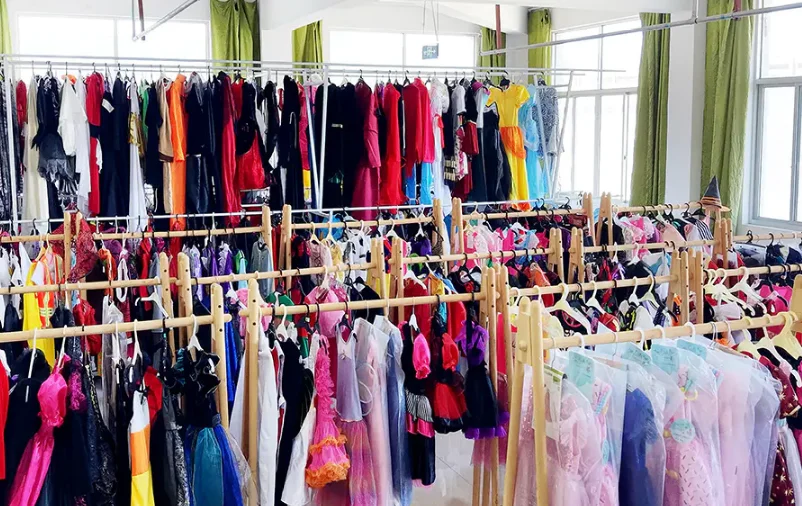
Cosplay clothing needs to combine visual character details with practical garment construction. A costume may contain multiple fabric layers, decorative elements, fitted sections, loose panels, trims, and accessories. For buyers purchasing wholesale cosplay costumes, understanding the material and construction details can make product planning easier, especially for stores, distributors, event suppliers, and online retailers.
For a direct product reference, visit Cosplay Costumes & Accessories to review different costume styles and accessory combinations.
How Does Fabric Selection Affect Costume Performance?
Fabric weight has a direct relationship with the appearance, movement, and handling of a costume. Polyester is widely used for costume production because it can support printed patterns, dyed colors, decorative details, and repeated production.
A lightweight polyester fabric may be around 90–140 GSM, making it suitable for flowing skirts, capes, sleeves, and decorative panels. Medium-weight fabrics around 150–220 GSM can provide more structure for dresses, jackets, uniforms, and fitted costume sections. Heavier materials can be specified for products that require a firmer silhouette.
Fabric composition can also be adjusted according to the product design. Common specifications include:
-
Polyester or polyester-blend fabric
-
Satin or satin-like surface finishes
-
Mesh panels for ventilation or visual effects
-
Tulle for skirts, veils, and layered decorations
-
Elastic fabric for fitted sections
-
Non-woven or foam components for structured accessories
Buyers can also request different fabric widths according to pattern requirements. A fabric width of approximately 150 cm is commonly convenient for garment cutting, although the actual requirement depends on the pattern layout.
Why Does Stitching Matter?
Costume construction involves more than fabric selection. Stitch density, seam position, edge finishing, and reinforcement can affect the finished garment.
For standard costume seams, buyers can specify a stitch length of approximately 2.5–3.5 mm depending on fabric thickness and garment structure. Overlock stitching can be used on internal edges to reduce fabric fraying, while topstitching can reinforce visible seams or decorative sections.
Areas exposed to repeated movement deserve additional attention. Shoulder seams, waist seams, sleeve connections, zipper areas, and costume closures can receive reinforcement during production.
For products with elastic components, buyers may also specify elastic width. Common options range from approximately 10 mm to 40 mm, depending on whether the elastic is used at the waist, sleeve opening, shoulder section, or decorative area.
What About Printing and Decorative Details?
Character-based costumes often depend on recognizable colors, patterns, symbols, and surface details. Printing specifications can include artwork dimensions, repeat patterns, color references, and printing positions.
Embroidery, appliqué, lace, ribbons, sequins, metallic trims, and decorative buttons can also be incorporated into the design. Buyers preparing a wholesale order can provide artwork files, color references, size charts, and sample requirements before bulk production.
For printed costumes, artwork resolution and file format should be confirmed before sampling. Vector artwork is useful for logos, geometric graphics, and line-based decoration, while high-resolution raster files can support detailed printed images.
How Can Buyers Prepare a Wholesale Specification?
A practical specification sheet can include:
| Item | Suggested Information |
|---|---|
| Fabric | Composition and GSM |
| Fabric Width | Approx. 140–160 cm or design-specific |
| Size Range | Kids, teen, adult, or custom |
| Closure | Zipper, hook-and-loop, buttons, elastic |
| Stitching | Seam type and reinforcement |
| Decoration | Embroidery, lace, printing, appliqué |
| Packaging | Individual bag or customized packing |
| Label | Size label and care label |
| Accessories | Props, headwear, gloves, belts, etc. |
A clear specification helps reduce misunderstandings during sampling and production. Buyers can also request pre-production samples to check fabric hand feel, color, dimensions, decoration placement, and overall construction before confirming a larger order.
For distributors and retailers, wholesale cosplay costumes can be developed around different themes, customer groups, and seasonal sales plans. A well-prepared technical specification gives each costume a defined production standard while leaving room for design customization.

 Bangla